
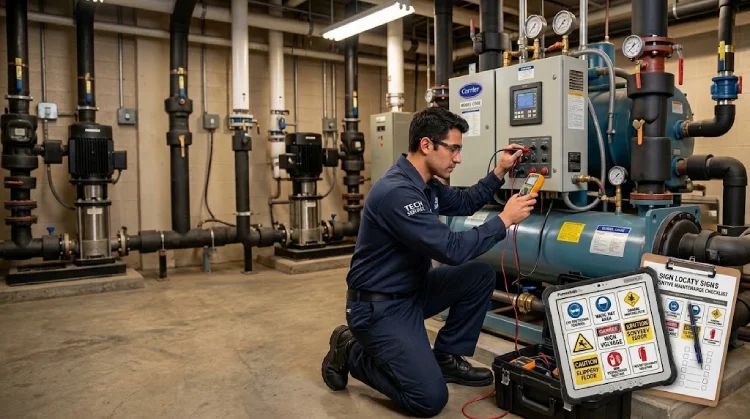
Commercial chillers are essential for maintaining reliable cooling in offices, hotels, shopping centres, industrial facilities, hospitals and other large buildings. Because these systems often operate for long hours under demanding conditions, regular preventive maintenance is important for maintaining cooling performance and reducing the risk of unexpected breakdowns.
But how often should a commercial chiller actually be serviced?
There is no single maintenance schedule that applies to every system. The right frequency depends on the chiller type, operating hours, building requirements, environmental conditions and manufacturer recommendations. However, routine inspections combined with monthly, quarterly and annual maintenance can help keep a commercial chiller operating reliably.
How Often Should a Commercial Chiller Be Serviced?
Commercial chillers should be inspected regularly rather than waiting for an annual service visit.
For many systems, a practical preventive maintenance schedule can include:
- Daily or weekly: Basic operating checks and monitoring
- Monthly: Inspection and cleaning of key components
- Quarterly: More detailed preventive maintenance and performance checks
- Every 6 months: Comprehensive system inspection where required
- Annually: Full professional servicing and testing
Chillers operating continuously or under heavy loads may require more frequent attention. Environmental conditions can also affect the maintenance schedule. Dust, high temperatures and demanding cooling requirements may increase the need for inspection and cleaning.
Why Regular Chiller Maintenance Matters
Preventive maintenance allows technicians and facility teams to identify small problems before they develop into major equipment failures.
A planned maintenance programme can help:
- Maintain consistent cooling performance
- Reduce unexpected system downtime
- Identify refrigerant or water leaks early
- Keep heat-transfer surfaces clean
- Reduce unnecessary strain on compressors and motors
- Maintain electrical and control components
- Support efficient system operation
- Extend the usable life of equipment
Instead of treating maintenance as a response to equipment failure, businesses can use regular inspections to monitor the condition of the chiller throughout the year.
Commercial Chiller Preventive Maintenance Checklist
The exact maintenance requirements will depend on whether the building uses an air-cooled or water-cooled chiller. However, the following checklist covers many of the areas that should be included in a preventive maintenance programme.
1. Check Operating Temperatures and Pressures
Technicians should monitor the chiller’s operating temperatures and pressures and compare them with the expected operating range.
Changes in these readings may indicate problems such as:
- Reduced heat transfer
- Refrigerant issues
- Restricted water flow
- Dirty condenser surfaces
- Control or sensor problems
Keeping operating records can also make it easier to identify gradual changes in system performance.
2. Inspect Condenser and Evaporator Components
Clean heat-transfer surfaces are important for efficient chiller operation.
Depending on the system, maintenance may involve inspecting and cleaning:
- Condenser coils
- Condenser tubes
- Evaporator components
- Air filters or strainers
- Cooling tower components
Dust, dirt, scale and other deposits can restrict heat transfer and force the chiller to work harder.
3. Check Refrigerant Levels and Possible Leaks
Refrigerant conditions should be checked by qualified technicians as part of scheduled maintenance.
Possible warning signs include:
- Reduced cooling capacity
- Abnormal pressure readings
- Longer operating cycles
- Unexpected alarms
- Visible signs of leakage around components
Any suspected refrigerant issue should be investigated promptly rather than simply adding refrigerant without determining the cause.
4. Inspect Electrical Connections
Commercial chillers contain numerous electrical components that should be inspected periodically.
Maintenance may include checking:
- Electrical terminals
- Contactors
- Control panels
- Wiring
- Motor connections
- Variable frequency drives
- Safety devices
Loose or damaged electrical connections can affect reliability and may eventually result in equipment failure.
5. Inspect Pumps and Water Circulation
For chilled-water systems, correct water circulation is essential.
Technicians should inspect:
- Chilled-water pumps
- Condenser-water pumps
- Valves
- Strainers
- Flow conditions
- Pipework for leaks
- Water pressure
Restricted or inadequate water flow can reduce cooling performance and place additional strain on the chiller.
6. Check Water Quality
Water-cooled chillers also require attention to water quality.
Scale, corrosion and biological buildup can affect heat-transfer surfaces and other system components. Water-treatment conditions should therefore be monitored as part of the overall maintenance programme.
7. Inspect Compressor Operation
The compressor is one of the most important components in a chiller.
Technicians should check for:
- Unusual noise
- Excessive vibration
- Abnormal operating temperatures
- Oil-related issues where applicable
- Changes in electrical current
- Fault codes or alarms
Changes in compressor behaviour should be investigated early to help prevent more serious mechanical problems.
8. Test Controls and Safety Devices
Modern chillers rely on sensors and controls to regulate system operation.
Preventive maintenance should include checking:
- Temperature sensors
- Pressure sensors
- Flow switches
- Control settings
- Alarm functions
- Safety cut-outs
- Building management system communication where applicable
Incorrect sensor readings or control settings can cause inefficient operation even when the mechanical components are functioning correctly.
Signs a Chiller May Need Service Before Its Scheduled Maintenance
Businesses should not wait for the next scheduled maintenance visit if the system begins showing signs of a problem.
Arrange an inspection if you notice:
- Reduced cooling performance
- Unusual noises or vibration
- Frequent system alarms
- Unexpected shutdowns
- Water or refrigerant leaks
- Higher-than-normal energy consumption
- Difficulty maintaining the required chilled-water temperature
- Longer operating cycles
- Abnormal pressure or temperature readings
Early investigation may prevent a minor problem from developing into a more expensive repair.
Adjust Maintenance Frequency to the Facility
A standard checklist is useful, but maintenance frequency should also reflect how the chiller is actually being used.
For example, a chiller serving an office building with predictable operating hours may have different requirements from one serving a hotel, hospital, production facility or other operation that requires continuous cooling.
Facility managers should consider:
- Equipment age
- Daily operating hours
- System load
- Previous breakdown history
- Manufacturer recommendations
- Site conditions
- Cooling requirements of the building
Maintenance schedules can then be adjusted based on the condition and performance of the equipment.
Keep Maintenance Records
Every maintenance visit should be documented.
Records can include:
- Operating temperatures
- Pressure readings
- Electrical readings
- Cleaning performed
- Parts replaced
- Faults identified
- Repairs completed
- Technician recommendations
Comparing these records over time can help facility teams identify recurring issues and plan maintenance before equipment performance deteriorates.
Preventive Maintenance Is Better Than Waiting for a Breakdown
Commercial chillers are major building systems, and unexpected failures can affect occupant comfort, business operations and productivity.
A structured preventive maintenance programme helps businesses monitor equipment condition, maintain reliable cooling and identify developing issues before they result in significant downtime.
The ideal maintenance frequency will vary depending on the chiller and operating environment, but combining routine monitoring with scheduled professional inspections provides a more proactive approach to chiller management.
For businesses looking for professional support with commercial air-cooled or water-cooled systems, Gulf Plant Trading & Contracting provides Chiller Maintenance Work in Qatar covering chiller service, maintenance and installation requirements.
Frequently Asked Questions
How often should a commercial chiller be serviced?
The frequency depends on the chiller type, operating hours, environmental conditions and manufacturer recommendations. Routine checks should be carried out regularly, with more detailed preventive maintenance generally scheduled monthly, quarterly, semi-annually or annually depending on system requirements.
Is annual chiller maintenance enough?
Annual servicing alone may not be sufficient for commercial chillers that operate continuously or under heavy loads. Regular monitoring and periodic preventive maintenance throughout the year can help identify developing problems earlier.
What should be checked during chiller maintenance?
Typical checks include operating temperatures and pressures, condenser and evaporator condition, refrigerant levels, electrical components, pumps, water flow, controls, safety devices and compressor operation.
How do I know if my chiller needs immediate maintenance?
Warning signs can include reduced cooling, unusual noises, frequent alarms, unexpected shutdowns, leaks, increased energy consumption and abnormal operating temperatures or pressures.
Do air-cooled and water-cooled chillers require the same maintenance?
No. While both require regular inspection, the maintenance requirements differ. Air-cooled chillers require particular attention to condenser coils and airflow, while water-cooled systems also require inspection of condenser tubes, water circulation, cooling towers and water quality.
Can preventive maintenance help reduce chiller breakdowns?
Yes. Preventive maintenance allows developing issues such as dirty heat-transfer surfaces, loose electrical connections, abnormal operating conditions and leaks to be identified before they contribute to larger system failures.